Wednesday, July 24, 2019

JACQIE'S CHIA SEEDS


Fast facts on chia seeds:
Here are some key points about chia seeds. More detail is in the main article.
  • Chia seeds are a good source of omega-3 fatty acids, fiber, antioxidants, iron, and calcium.
  • A 28-gram, or 1-ounce, serving of chia seeds also contains 5.6 grams of protein.
  • Mixed with water, they can replace egg in vegan cooking.
  • Chia seeds can be eaten cooked or raw, but they should be added to another food or soaked before eating.

Nutrition
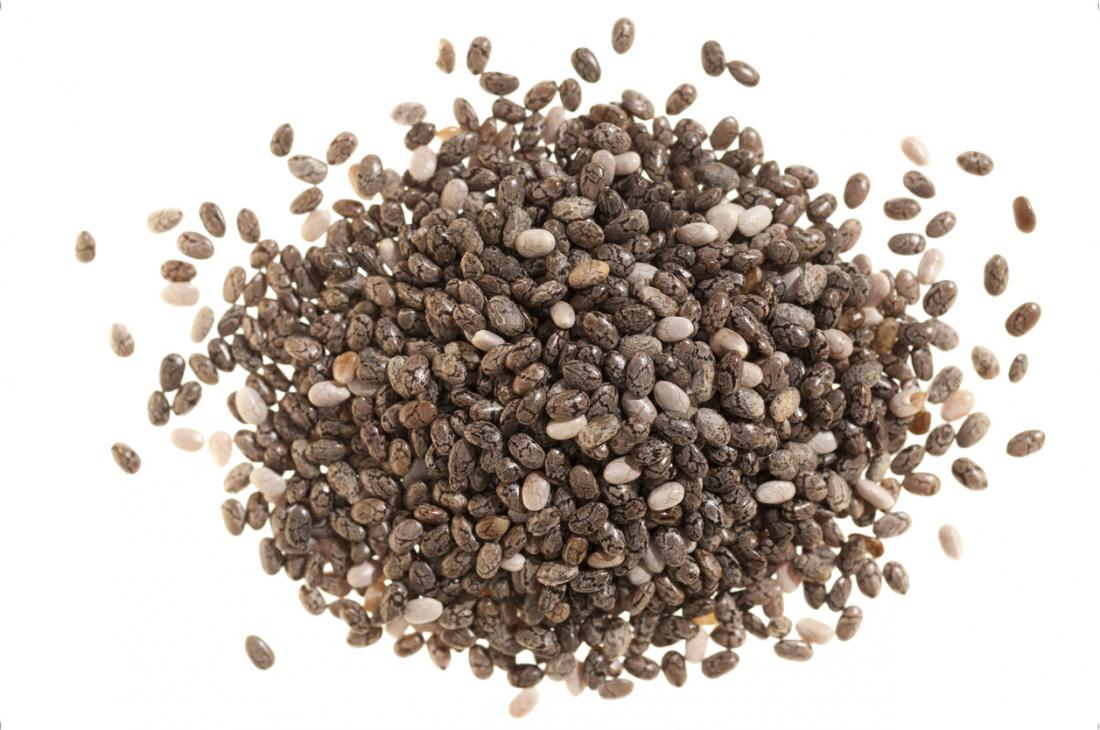
Chia seeds are rich in nutrients and fiber.
According to the United States Department of Agriculture (USDA) National Nutrient Database, a 28-gram, or one-ounce serving of chia seeds contains:
  • 131 calories
  • 8.4 grams of fat
  • 13.07 grams of carbohydrate
  • 11.2 grams of fiber
  • 5.6 grams of protein
  • No sugar
Eating once ounce of chia seeds each day would provide 18 percent of daily calcium needs, 27 percent of phosphorus, 30 percent of manganese, and smaller amounts of potassium and copper.
Chia seeds provide more omega-3s, calcium, phosphorus, and fiber than flaxseeds. Most people do not consume enough of these essential nutrients.

Benefits

Plant-based foods have long been associated with a reduced risk of many adverse health conditions, including obesitydiabetesheart disease, and overall mortality.
They have been shown to support a healthy complexion, increased energy, and overall lower weight.

Chia and the power of fiber

The United States (U.S.) dietary guidelines for 2015 to 2020 suggest that men under the age of 50 years should consume 30.8 grams (g) of fiber per day and women under the age of 50 years should consume 25.2 g per day.
For adults over 50 years of age, the recommendation for men is 28 g per day, and for women, it is 22.4 g per day. Most people consume less than half of that recommendation.
The easiest way to increase fiber intake is to eat more plant-based foods like fruits, vegetables, nuts, seeds, and unprocessed grains. Just one ounce of chia seeds provides 10 grams of fiber, almost half the daily recommendation for a woman over 50 years.

Weight loss

Foods that are high in fiber help people to feel full for longer, and they are usually lower in calories. Increased fiber intake and a high fiber diet have been shown to help with weight loss.
Chia seeds contain nearly 5 grams of fiber per tablesoon, and their high levels of omega-3-fatty acids and alpha-linoleic acid may be useful for weight loss. The seed can also be consumed as a gel when mixed with water. This causes it to digest more slowly in the body, potentially preventing hunger for a longer period.
However, evidence is scant. A review, published in the Journal of Obesity, concludes that "there is limited data to suggest the use of chia seeds for weight loss."
Another study, published in Nutrition Research, concludes that, in overweight adults, chia seeds have "no influence on body mass or composition, or various disease risk factor measures."

Treating diverticulosis

High-fiber diets have been shown to decrease the prevalence in flare-ups of diverticulitis by absorbing water in the colon and making bowel movements easier to pass.
Eating a healthful, fiber-filled diet with plenty of fruit and vegetables can reduce pressure and inflammation in the colon.
The exact causes of diverticular disease are not known, but the condition has repeatedly been associated with a low fiber diet.

Cardiovascular disease and cholesterol

Increased fiber intake has been shown to lower blood pressure and cholesterol levels.
review of 67 separate controlled trials found that even a modest 10-gram per day increase in fiber intake reduced LDL, or "bad" cholesterol, as well as total cholesterol.
Recent studies have shown that dietary fiber may play a role in regulating the immune system and inflammation. In this way, it may decrease the risk of inflammation-related conditions such as cardiovascular disease, diabetes, cancer, and obesity.

Diabetes

While there aren't many studies on the effect of chia on blood glucose and insulin resistance, a 2017 study suggests that chia seeds may have the ability to convert glucose into a slow-release carbohydrate. This could have a positive effect on people with type 2 diabetes.
High-fiber diets are associated with a lower risk of developing diabetes, and eating high-fiber meals helps to keep blood sugar stable.
Based on a review of findings from several large studies, The National Institute of Medicine foundthat diets with 14 grams of fiber for every 1,000 calories were associated with significant reductions in the risk of both coronary heart disease and type 2 diabetes.

Digestion and detox


A diet with adequate fiber prevents constipation and promotes regularity for a healthy digestive tract. Regular bowel movements are crucial for the daily excretion of toxins through the bile and stool.

JACQIE'S CASTOR OIL


Jacqie's Castor oil is a multi-purpose vegetable oil that people have used by many people.
It’s made by extracting oil from the seeds of the Ricinus communis plant.
These seeds, which are known as castor beans, contain a toxic enzyme called ricin. However, the heating process that castor oil undergoes deactivates it, allowing the oil to be used safely.
Castor oil has a number of medicinal, industrial and pharmaceutical uses.
It's commonly used as an additive in foods, medications and skin care products, as well as an industrial lubricant and biodiesel fuel component.
In ancient Egypt, castor oil was burned as fuel in lamps, used as a natural remedy to treat ailments like eye irritation and even given to pregnant women to stimulate labor (1Trusted Source).
Today, castor oil remains a popular natural treatment for common conditions like constipation and skin ailments and is commonly used in natural beauty products.
Here are 7 benefits and uses of castor oil.


1. A Powerful Laxative

It’s classified as a stimulant laxative, meaning that it increases the movement of the muscles that push material through the intestines, helping clear the bowels.
Stimulant laxatives act rapidly and are commonly used to relieve temporary constipation.
When consumed by mouth, castor oil is broken down in the small intestine, releasing ricinoleic acid, the main fatty acid in castor oil. The ricinoleic acid is then absorbed by the intestine, stimulating a strong laxative effect (2Trusted Source).
In fact, several studies have shown that castor oil can relieve constipation.
For example, one study found that when elderly people took castor oil, they experienced decreased symptoms of constipation, including less straining during defecation and lower reported feelings of incomplete bowel movements (3Trusted Source).
While castor oil is considered safe in small doses, larger amounts can cause abdominal cramping, nausea, vomiting and diarrhea (4Trusted Source).
Although it can be used to relieve occasional constipation, castor oil is not recommended as a treatment for long-term issues.
SUMMARYCastor oil can be used as a natural remedy for occasional constipation. However, it can cause side effects like cramping and diarrhea and should not be used to treat chronic constipation.

Castor oil is rich in ricinoleic acid, a monounsaturated fatty acid.
These types of fats act as humectants and can be used to moisturize the skin.
Humectants retain moisture by preventing water loss through the outer layer of the skin (5Trusted Source).
Castor oil is often used in cosmetics to promote hydration and often added to products like lotions, makeup and cleansers.
You can also use this rich oil on its own as a natural alternative to store-bought moisturizers and lotions.
Many popular moisturizing products found in stores contain potentially harmful ingredients like preservatives, perfumes and dyes, which could irritate the skin and harm overall health (5Trusted Source).
Swapping out these products for castor oil can help reduce your exposure to these additives.
Plus, castor oil is inexpensive and can be used on the face and body.
Castor oil is thick, so it’s frequently mixed with other skin-friendly oils like almond, olive and coconut oil to make an ultra-hydrating moisturizer.
Though applying castor oil to the skin is considered safe for most, it can cause an allergic reaction in some people (6Trusted Source).
SUMMARYCastor oil can help lock moisture in the skin. Though this natural alternative to store-bought products is considered safe for most, it can cause allergic reactions in some.


Applying castor oil to wounds creates a moist environment that promotes healing and prevents sores from drying out.
Venelex, a popular ointment used in clinical settings to treat wounds, contains a mixture of castor oil and Peru balsam, a balm derived from the Myroxylon tree (7Trusted Source).
Castor oil stimulates tissue growth so that a barrier can be formed between the wound and the environment, decreasing the risk of infection.
It also reduces dryness and cornification, the buildup of dead skin cells that can delay wound healing (8).
Studies have found that ointments containing castor oil may be especially helpful in healing pressure ulcers, a type wound that develops from prolonged pressure on the skin.
One study looked at the wound-healing effects of an ointment containing castor oil in 861 nursing home residents with pressure ulcers.
Those whose wounds were treated with castor oil experienced higher healing rates and shorter healing times than those treated with other methods (9Trusted Source).

Ricinoleic acid, the main fatty acid found in castor oil, has impressive anti-inflammatory properties.
Studies have shown that when castor oil is applied topically, it reduces inflammation and relieves pain.
The pain-reducing and anti-inflammatory qualities of castor oil may be particularly helpful to those with an inflammatory disease such as rheumatoid arthritis or psoriasis.
Animal and test-tube studies have found that ricinoleic acid reduces pain and swelling (10Trusted Source).
One study demonstrated that treatment with a gel containing ricinoleic acid led to a significant reduction in pain and inflammation when applied to the skin, compared to other treatment methods (11Trusted Source).
A test-tube component of the same study showed that ricinoleic acid helped reduce inflammation caused by human rheumatoid arthritis cells more than another treatment.
Aside from castor oil’s potential to reduce inflammation, it may help relieve dry, irritated skin in those with psoriasis, thanks to its moisturizing properties.
Although these results are promising, more human studies are needed to determine the effects of castor oil on inflammatory conditions.

Acne is a skin condition that can cause blackheads, pus-filled pimples and large, painful bumps on the face and body.
It’s most common in teens and young adults and can negatively impact self-esteem.
Castor oil has several qualities that may help reduce acne symptoms.
Inflammation is thought to be a factor in the development and severity of acne, so applying castor oil to the skin may help reduce inflammation-related symptoms (12Trusted Source).
Acne is also associated with an imbalance of certain types of bacteria normally found on the skin, including Staphylococcus aureus (13Trusted Source).
Castor oil has antimicrobial properties that may help fight bacterial overgrowth when applied to the skin.
One test-tube study found that castor oil extract showed considerable antibacterial power, inhibiting the growth of several bacteria, including Staphylococcus aureus (14Trusted Source).
Castor oil is also a natural moisturizer, so it may help soothe the inflamed and irritated skin typical in those with acne.

Candida albicans is a type of fungus that commonly causes dental issues like plaque overgrowth, gum infections and root canal infections 
Castor oil has antifungal properties and may help fight off Candida, keeping the mouth healthy.
One test-tube study found that castor oil eliminated Candida albicans from contaminated human tooth roots.
Castor oil may also help treat denture-related stomatitis, a painful condition thought to be caused by Candida overgrowth. This is a common issue in elderly people who wear dentures.
A study in 30 elderly people with denture-related stomatitis showed that treatment with castor oil led to improvements in the clinical signs of stomatitis, including inflammation .
Another study found that brushing with and soaking dentures in a solution containing castor oil led to significant reductions in Candida in elderly people who wore dentures.


Many people use castor oil as a natural hair conditioner.
Dry or damaged hair can especially benefit from an intense moisturizer like castor oil.
Applying fats like castor oil to the hair on a regular basis helps lubricate the hair shaft, increasing flexibility and decreasing the chance of breakage Trusted Source.
Castor oil may benefit those who experience dandruff, a common scalp condition characterized by dry, flaky skin on the head.
Though there are many different causes of dandruff, it has been linked to seborrhoeic dermatitis, an inflammatory skin condition that causes red, scaly patches on the scalp Trusted Source.
Due to castor oil’s ability to reduce inflammation, it may be an effective treatment for dandruffthat is caused by seborrhoeic dermatitis.
Plus, applying castor oil to the scalp will help moisturize dry, irritated skin and may help reduce flaking.
CALL 0744717893

SOYA BEAN AND IT'S BENEFITS

High in protein and used as a vegetarian and lactose alternative for many foods, soya has transcended its Asian origins to become the most widely cultivated legume across the globe. Nutritionist Jo Lewin shares the nutritional highlights, recent research findings and a host of recipes to help you understand and utilise the many forms of soya...

An introduction to soya

Like other beans, the soya bean (Glycine max) grows in pods enclosing edible seeds. They are usually green but can be yellow, brown or black. The texture is so adaptable that soya beans are frequently processed into a variety of foods. Soya beans – also known as edamame beans when eaten fresh from the pod - are consumed as an alternative to meat. They are the basis of soya milk, tofu, miso, tempeh and soya protein.

OriginsCherry soya yogurt

The soya bean plant is native to China, where it has been cultivated for well over 13,000 years. It was an essential crop for the ancient Chinese who regarded it a necessity for life. Soya beans were introduced into other regions of Asia centuries later and it wasn’t until the early 20th century that it began to be used for more than animal feed in the West. The soya bean is now the most widely grown and utilised legume worldwide.
Since the 1970s there has been a marked increase in the consumption of traditional soya foods and the development of other soya foods which simulate traditional meat and dairy products such as soya milk, soya sausages, soya cheese and soya yogurts. 
Ingredient focus soya

Nutritional highlights

The key benefits of soya are its high protein content, vitaminsminerals and insoluble fibre. The soya bean has been transformed into a number of popular soya based foods including:
  • Miso – a fermented soya bean paste that is used as a flavouring, popular in Asian cuisine. It is a good source of many minerals.
  • Tempeh – is an Indonesian specialty typically made by cooking and dehulling soya beans and forming a textured, solid ‘cake’. It is a very good source of protein, B vitamins and minerals.
  • Tofu – also known as bean curd is made from soya milk by coagulating the soya proteins with calcium or magnesium salts. The whey is discarded and the curds are processed. It is an excellent source of iron and calcium and a good source of protein.

100g (cooked) serving of soya beans contains*:
141kcal   7.3g fat   0.9g sat fat 14g protein 5.1g carbs8.1g fibre    
*figures relate to dried soy beans, boiled in unsalted water, from McCance & Widdowson's, 'The Composition of Foods', Seventh edition.
The high fibre content makes soya beans and other soya containing foods valuable in cases of constipation, high cholesterol and type -2 diabetes

Research

PhytoestrogensLemony three bean & feta salad
Soya contains phytoestrogens, chemicals found in plant foods. There are different types of phytoestrogens but the ones found in soya bean products are called isoflavones. Soya isoflavones (daidzein and genistein) have attracted a great deal of research and some studies suggest that certain women with a soya-rich diet may have a lower risk of breast cancer. However, it is not clear whether genetic makeup (which influences the way in which the body metabolises food) and environmental factors interact with the soya and therefore produce different effects in people. 
Phytoestrogens have been found to help block the effects of excess oestrogen in the body, evening out any imbalance in the ratio between oestrogen and progesterone. They appear to work by locking into the oestrogen-receptor sites on cells and in doing so they block out the stronger natural oestrogens. They can therefore be helpful in improving symptoms of oestrogen dominance such as PMS and endometriosis.
Due to the phytoestrogen content of soya, many women decide to include it in their diet as they enter the menopause. During the menopause, the body’s natural production of oestrogen stops and symptoms may ensue. As phytoestrogens act as a weak oestrogen, they may help relieve symptoms by boosting levels slightly. 
Protein
Soya is regarded as equal to animal foods in protein quality yet it is thought that plant proteins are processed differently to animal proteins. For example, experimental studies have shown that soya protein isolates tend to lower cholesterol levels, in those people with typically high levels, while protein from animal sources may raise cholesterol levels. 
Phytosterols
Soya beans also contain compounds called phytosterols. These plant compounds are structurally similar to cholesterol and steroid hormones. They function to inhibit the absorption of cholesterol by blocking absorption sites. The cholesterol lowering effects of phytosterols are well documented. 
Genetics and environmental factors play a huge part in how our bodies react to certain foods, so as yet we can’t say whether a diet rich in phytoestrogenic foods is beneficial or not. If you are a vegetarian or vegan, soya-based foods can be an invaluable part of your diet. 

How to select & store

Packets of dried soya beans are generally available in supermarkets and health food stores. Keep airtight and in a cool, dry place. Dried soya beans are best soaked before cooking in order to make them easier to digest. If purchasing canned beans, look for those that do not contain extra salt or additives. Once cooked, soya beans can be stored in the refrigerator for up to three days.
Edamame are fresh soya beans. They should be a deep green colour with firm, unbruised pods. Edamame can be found in health food shops and Asian supermarkets. They may be in the frozen section, although some shops now offer pre-cooked edamame. Many sushi restaurants serve edamame beans.

Safety

Edamame & chilli dip with crudités
Soybeans are a common allergen. Raw or sprouted soya beans contain substances called goitrogens, which can interfere with thyroid gland activity. Soya also contains oxalate. Individuals with a history of oxalate containing kidney stones should avoid overconsumption.